
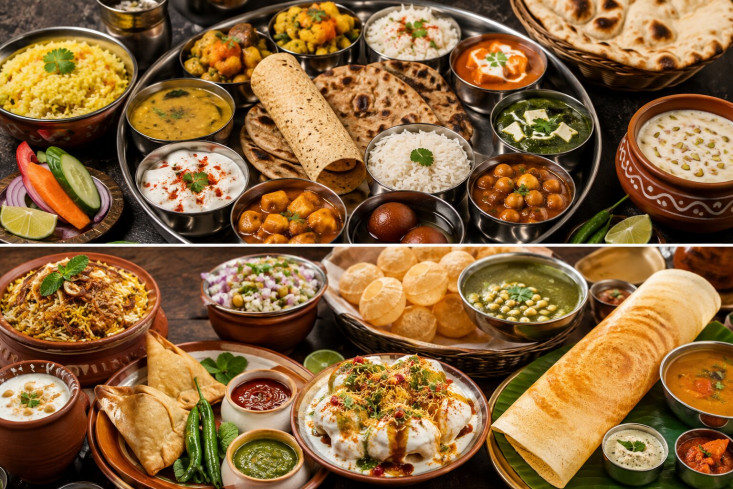
Indian Traditional Food, A Celebration of Culture, Flavor, and Heritage
Indian traditional food is much more than a collection of delicious dishes—it is a reflection of the country’s rich culture, history, traditions, and regional diversity. From aromatic biryani and creamy curries to crispy dosas and flavorful street foods, Indian cuisine offers an extraordinary variety of tastes and cooking styles.
One of the most remarkable features of Indian food is its regional diversity. In North India, dishes such as butter chicken, naan, tandoori chicken, chole, and paneer tikka are popular. These foods often feature rich gravies, dairy products, wheat-based breads, and aromatic spices. South Indian cuisine is famous for dosa, idli, sambar, vada, and coconut-based dishes. Rice, lentils, curry leaves, mustard seeds, and coconut are commonly used.
Eastern India is well known for its rice-based meals, fish dishes, sweets, and distinctive flavors. Bengali cuisine, for example, includes traditional dishes such as macher jhol, shorshe ilish, bhuna khichuri, and a wide variety of sweets. Western India offers equally diverse flavors, from Gujarati dhokla and thepla to Rajasthani dal baati churma and Maharashtrian pav bhaji.
Spices are at the heart of traditional Indian cooking. Turmeric, cumin, coriander, cardamom, cinnamon, cloves, ginger, garlic, and chili are carefully combined to create complex aromas and flavors. Indian cooking is not simply about making food spicy; it is about achieving a balanced combination of taste, fragrance, texture, and color.
Traditional Indian meals also have strong cultural and social importance. Food is commonly prepared and shared during festivals, weddings, religious celebrations, and family gatherings. Festivals such as Diwali, Eid, Pongal, Onam, and Holi are often associated with special traditional dishes and sweets. Sharing food with guests is also an important part of Indian hospitality.
Another important characteristic of Indian cuisine is the variety of vegetarian foods. Lentils, beans, vegetables, paneer, rice, and grains are used creatively to prepare nutritious and satisfying meals. Traditional cooking methods such as slow cooking, roasting, steaming, and clay-pot cooking further enhance the natural flavors of ingredients.
Indian traditional food has now become popular worldwide. Indian restaurants can be found in many countries, allowing people to experience authentic curries, breads, rice dishes, snacks, and sweets without traveling to India.
Ultimately, Indian traditional food represents a beautiful combination of heritage, diversity, hospitality, and flavor. Every region has its own culinary identity, and every dish tells a story. Exploring Indian cuisine is therefore not just a journey through different tastes—it is a journey through India’s rich cultural heritage.


